
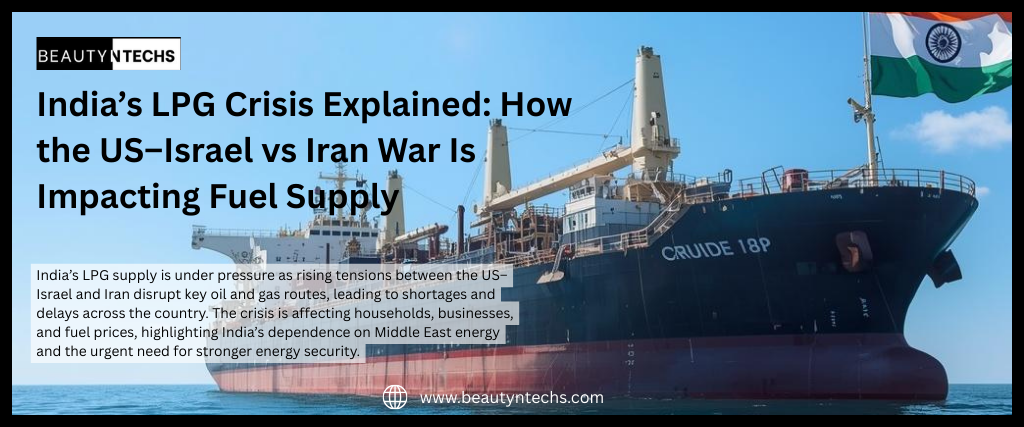
The global energy landscape has entered one of its most volatile phases in recent history. The ongoing conflict involving the United States, Israel, and Iran has triggered a chain reaction across global oil and gas markets. For India, a country heavily dependent on imported energy, the consequences are already visible in the form of LPG shortages, rising fuel prices, and supply disruptions.
What once seemed like distant geopolitical tension has now reached Indian households, affecting everything from kitchen gas availability to industrial operations. The crisis is not just about fuel—it is about energy security, diplomacy, and India’s growing role in a fragile global order.
The Root Cause: Strait of Hormuz Disruption
At the heart of this crisis lies the Strait of Hormuz, one of the most critical energy chokepoints in the world. Nearly 20% of global oil supply passes through this narrow waterway, making it a lifeline for energy-importing nations like India.
However, the ongoing conflict has led to:
- Reduced tanker movement
- Blockade-like conditions
- Attacks and threats to energy shipments
As a result, tanker traffic dropped sharply, with many ships stranded or rerouted.
For India, this disruption is severe because:
- Around 80–90% of LPG imports come from the Gulf region
- Nearly 90% of India’s oil is imported
This dependency makes India extremely vulnerable to geopolitical shocks.
LPG Crisis in India: What’s Happening on the Ground
The impact of the conflict is no longer theoretical—it is being felt across India.
Supply Disruptions
India has seen a sharp fall in LPG availability, with consumption dropping significantly due to delayed shipments.
- LPG sales dropped over 17% year-on-year
- Supply chains slowed due to tanker delays
- Long queues formed at gas agencies
In many cities:
- Restaurants shut down or reduced operations
- Households faced delayed cylinder deliveries
- Panic buying increased demand pressure
Mundra Port & Shipping Crisis
Ports like Mundra (Gujarat)—one of India’s largest energy import hubs—have become critical points in this crisis.
Due to the war:
- Multiple LPG and oil vessels were stuck near the Strait of Hormuz
- Indian ships carrying fuel faced delays and uncertainty
- Some shipments were halted mid-route
Reports indicate that several Indian vessels, including LPG carriers, were stranded due to military tensions.
Even when ships reach Indian ports:
- Unloading is delayed
- Supply distribution slows
- Storage capacity gets stressed
This creates a domino effect across the entire fuel supply chain.
Why LPG Was Hit Harder Than Petrol or Diesel?
Interestingly, LPG has been impacted more severely than petrol or diesel.
Why?
- LPG imports are more region-specific (Gulf-heavy)
- Limited alternative suppliers
- Dependence on direct shipping routes via Hormuz
At one point, nearly half of India’s LPG supply was disrupted due to the crisis.
Unlike crude oil, which India sources from multiple countries, LPG supply is less diversified—making it more fragile.
India’s Diplomatic Strategy: Quiet Strength in Crisis
While the situation is tense globally, India has taken a measured and strategic diplomatic approach.
Balanced Foreign Policy
India has maintained relations with:
- The United States
- Israel
- Iran
- Gulf nations
This balancing act has helped India:
- Avoid direct conflict involvement
- Secure selective supply routes
- Maintain negotiation channels
Strategic Moves
India has actively:
- Coordinated safe passage for LPG tankers
- Used naval presence to secure shipping routes
- Negotiated limited movement of fuel vessels
In fact, Iran allowed select Indian LPG tankers to pass through Hormuz under special conditions, showing diplomatic trust.
Domestic Policy Actions
To stabilize the situation, the government has:
- Ordered refineries to increase LPG production
- Prioritized household gas over industrial use
- Directed oil companies to share supply data centrally
- Urged citizens to avoid panic buying
These steps highlight India’s ability to respond quickly during global disruptions.
How India Is Protecting Its Energy Security?
India is not just reacting—it is actively strengthening its position.
Strategic Reserves
India has built underground storage reserves to:
- Store crude oil
- Manage short-term supply shocks
Diversifying Supply Sources
India is exploring:
- Imports from the US
- African energy markets
- Alternative shipping routes
However, these alternatives take longer and are costlier.
Domestic Production Boost
Refineries have increased LPG output significantly:
- Production increased by 10–30% during crisis phase
- Facilities operating at full capacity
Global Energy Crisis: A Ripple Effect
The war has not just impacted India—it has shaken the entire global energy market.
- Oil prices crossed $100 per barrel
- LNG production disrupted in Qatar
- Energy infrastructure targeted in Gulf
This has created:
- Inflation pressure globally
- Supply chain instability
- Increased competition for energy resources
India’s Rising Global Position During the Crisis
Despite the challenges, India is emerging stronger on the global stage.
Strategic Importance
India is now:
- A major energy consumer
- A refining hub
- A key geopolitical player
Strengthening Global Relations
India’s diplomatic ties are expanding with:
- Russia (discounted oil imports)
- Middle East nations
- Western allies
This multi-alignment strategy ensures:
- Energy security
- Political stability
- Economic continuity
Impact on Indian Economy and Society
The LPG crisis is not just about supply—it affects everyday life.
Households
- Delayed cylinder delivery
- Rising refill costs
- Shift to alternative cooking methods
Businesses
- Restaurants shutting temporarily
- Hotels reducing services
- Small industries struggling
Economy
- Increased import bills
- Pressure on rupee
- Inflation risks
Experts warn that prolonged disruption could impact economic growth.
The Bigger Picture: Energy, War, and Humanity
Beyond numbers and policies, this crisis raises deeper questions.
Modern wars are no longer confined to borders—they affect:
- Food
- Energy
- Climate
- Daily human survival
The atmosphere itself is at risk:
- Increased emissions from conflict zones
- Destruction of energy infrastructure
- Environmental degradation
Nuclear Powers and Global Risk
One of the biggest concerns is the involvement of nuclear-capable nations.
Even without direct nuclear use:
- Fear of escalation impacts markets
- Global stability weakens
- Diplomatic tensions rise
This is why global leaders are trying to avoid full-scale escalation.
What We Risk Losing as Humanity?
Every war comes with a cost—but modern conflicts cost far more than territory.
We risk losing:
- Economic stability
- Environmental balance
- Human lives
- Global cooperation
History reminds us that rebuilding after war takes decades—but the emotional and societal damage lasts generations.
Conclusion: Crisis, Opportunity, and Responsibility
India’s LPG crisis is not just a supply issue—it is a reflection of how deeply interconnected the world has become.
The US–Israel vs Iran conflict has exposed:
- Global energy dependency
- Fragility of supply chains
- Importance of diplomacy
Yet, it has also shown:
- India’s strategic resilience
- Diplomatic strength
- Ability to navigate global uncertainty
As the world stands at a crossroads, the real question is not just about fuel or war—but about how humanity chooses to move forward.
Will we continue down a path of conflict, or will we learn to protect what truly matters—our planet, our people, and our shared future?
wish you best and best