
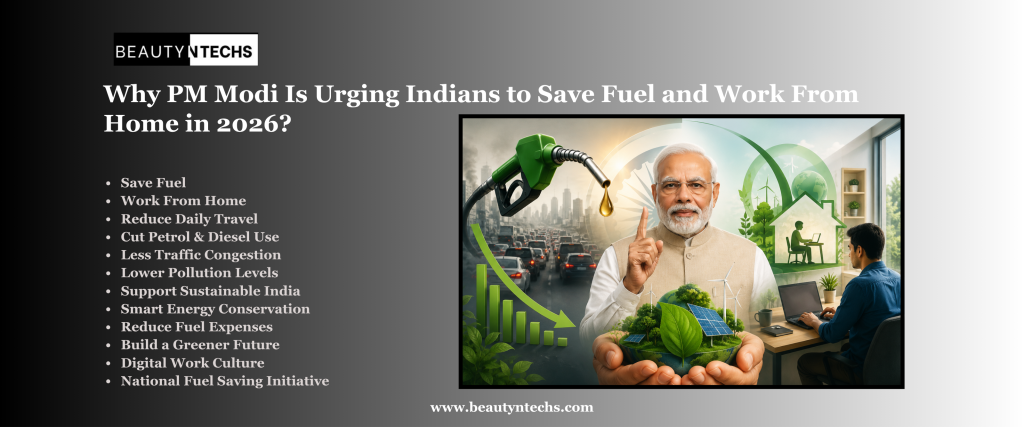
India is once again witnessing discussions around fuel conservation, work from home policies, reduced foreign travel, and cutting unnecessary expenses. Prime Minister Narendra Modi recently appealed to citizens, businesses, and industries to adopt more responsible fuel usage habits amid rising global uncertainty.
His statement quickly sparked questions across the country:
- Is India facing a fuel crisis?
- Will petrol and diesel prices increase again?
- Is another lockdown coming?
- Why is the government promoting work from home in 2026?
- What is happening in the global oil market?
The reality is not as alarming as social media rumors suggest, but the concerns behind the Prime Minister’s warning are very real. India is preparing itself for possible economic pressure caused by global geopolitical tensions, rising crude oil prices, and uncertainty in international trade routes.
In this blog, we will explore the real reasons behind PM Modi’s appeal, what is happening globally, how it could affect Indian citizens, and why fuel conservation may become one of the biggest national priorities in 2026.
What Did PM Modi Actually Say?
PM Modi urged Indians to:
- Save petrol and diesel
- Reduce unnecessary vehicle usage
- Consider work from home where possible
- Avoid wasteful fuel consumption
- Limit unnecessary foreign travel
- Use public transportation
- Reduce dependency on imported resources
- Be mindful of national economic stability
The appeal was presented as a preventive economic measure rather than an emergency announcement.
Importantly, the government has not announced:
- Any nationwide lockdown
- Fuel rationing
- Mandatory work from home
- Travel bans
- Economic emergency measures
Instead, the government is encouraging responsible consumption before the situation becomes worse globally.
The Main Reason: Rising Global Oil Crisis
The biggest reason behind this warning is the rising instability in the global petroleum market.
India imports nearly 85% of its crude oil requirements from other countries. This means India heavily depends on international oil supply chains to keep transportation, industries, aviation, and businesses running.
Whenever global oil prices rise, India faces immediate economic pressure.
Why Oil Prices Are Rising in 2026?
Several international developments are creating uncertainty:
1. Middle East Geopolitical Tensions
Conflicts and rising military tensions involving countries like Iran, Israel, and surrounding Gulf nations have increased fears of oil supply disruption.
The Middle East is one of the world’s largest oil-producing regions. Any instability there directly impacts global crude oil prices.
2. Risk Around the Strait of Hormuz
The Strait of Hormuz is one of the most important oil transportation routes in the world.
A large percentage of global crude oil shipments pass through this narrow route daily.
If tensions escalate or shipping gets disrupted:
- oil supply slows down,
- prices rise globally,
- importing countries like India suffer economically.
This is one of the biggest concerns for policymakers right now.
3. Rising Shipping and Import Costs
Global freight and shipping insurance costs are increasing because of geopolitical risks.
Even if oil supply continues normally, transportation expenses are becoming more expensive, increasing the final cost India pays for crude oil imports.
Why India Is More Vulnerable Than Other Countries?
India is one of the world’s largest energy consumers.
The country depends heavily on:
- imported crude oil,
- international trade,
- fuel-based transportation,
- aviation,
- logistics,
- manufacturing industries.
When oil prices rise:
- petrol prices increase,
- diesel becomes expensive,
- flight tickets rise,
- transport costs increase,
- food prices rise,
- inflation grows.
This affects both businesses and common citizens.
Why PM Modi Mentioned Work From Home?
One of the most discussed parts of the statement was the suggestion to encourage work from home.
Many people immediately associated this with the COVID-19 pandemic, but the intention is different this time.
The Real Goal Behind Work From Home
Work from home can significantly reduce fuel consumption because:
- fewer people commute daily,
- less traffic means lower fuel usage,
- companies reduce transportation costs,
- pollution decreases,
- public infrastructure pressure reduces.
During the pandemic, India witnessed a massive drop in fuel consumption because millions of people stayed home.
The government now sees hybrid work models as an economic advantage during uncertain energy situations.
Why Fuel Conservation Matters Right Now?
Fuel conservation is not only about saving money individually. It is connected to national economic security.
India Spends Billions on Oil Imports
India pays for imported oil mostly in US dollars.
If crude oil prices rise:
- India needs more dollars,
- pressure on foreign exchange reserves increases,
- the Indian rupee may weaken,
- imports become more expensive.
This creates a chain reaction across the economy.
How Higher Oil Prices Affect Everyday Indians?
Many people think oil price increases only affect vehicle owners, but the impact is much larger.
1. Expensive Transportation
Higher diesel prices increase:
- bus fares,
- truck transportation costs,
- delivery charges,
- cab prices,
- logistics expenses.
2. Rising Food Prices
Most goods in India are transported through trucks.
When fuel prices rise:
- vegetables become expensive,
- groceries cost more,
- packaged products increase in price.
This contributes directly to inflation.
3. Costlier Flights and Travel
Aviation fuel becomes more expensive when crude oil prices rise.
This affects:
- domestic flights,
- international travel,
- tourism industries,
- hotel and hospitality sectors.
4. Increased Business Costs
Manufacturing industries, factories, delivery companies, and logistics businesses depend heavily on fuel.
Rising operational costs may:
- reduce profits,
- increase product prices,
- slow business growth.
Why Modi Asked People to Reduce Foreign Travel?
Another important part of the appeal was reducing unnecessary foreign trips.
Many people misunderstood this statement, but it mainly relates to protecting India’s foreign exchange reserves.
Foreign Travel Means More Dollar Outflow
When Indians travel abroad:
- foreign currency gets spent,
- tourism expenses leave the country,
- demand for dollars increases.
During global economic uncertainty, governments try to reduce unnecessary outflow of foreign currency.
This helps maintain economic stability.
Why Gold Purchases Were Also Mentioned?
India is one of the world’s largest importers of gold.
Gold imports:
- increase pressure on foreign reserves,
- contribute to trade imbalance,
- increase dependency on imports.
During uncertain economic periods, governments often encourage citizens to avoid excessive gold purchases.
Is India Facing a Fuel Shortage?
Currently, there is no official fuel shortage in India.
Petrol pumps are functioning normally, and oil supply chains remain active.
However, the government is trying to avoid a future crisis by promoting preventive measures early.
This is a strategic approach rather than a panic response.
Is Another Lockdown Coming?
No official announcement suggests another lockdown.
The current situation is entirely different from COVID-19.
The recommendation for work from home is primarily linked to:
- reducing fuel consumption,
- lowering transportation pressure,
- supporting economic stability.
There is no indication of:
- nationwide restrictions,
- business shutdowns,
- public movement bans.
How Other Countries Are Also Taking Similar Steps?
India is not alone in focusing on energy conservation.
Several countries are:
- investing in renewable energy,
- promoting electric vehicles,
- encouraging hybrid work culture,
- reducing dependence on imported oil.
The global energy crisis has pushed governments worldwide to rethink fuel consumption habits.
The Role of Electric Vehicles and Green Energy
The situation also highlights why India is aggressively promoting:
- electric vehicles,
- solar energy,
- public transportation,
- green infrastructure.
Reducing oil dependency is becoming a long-term national priority.
Government initiatives like:
- EV adoption,
- solar missions,
- metro expansion,
- ethanol blending,
- renewable energy projects
are all connected to strengthening India’s energy independence.
How Businesses Can Respond?
Businesses may need to adapt strategically if fuel prices continue rising.
Smart Steps Companies Can Take
Hybrid Work Models
Allowing employees to work remotely can reduce operational costs.
Digital Meetings
Replacing unnecessary travel with online meetings saves money and fuel.
Efficient Logistics
Businesses can optimize delivery routes and transportation systems.
Sustainable Operations
Investing in renewable energy and efficient infrastructure can reduce long-term dependence on fuel.
What Citizens Can Do to Save Fuel?
Individuals can also contribute significantly.
Practical Fuel Saving Tips
- Use public transport more frequently
- Carpool whenever possible
- Avoid unnecessary driving
- Maintain proper tire pressure
- Combine multiple errands into one trip
- Prefer hybrid or electric vehicles
- Reduce unnecessary air travel
- Work remotely if possible
Even small changes can collectively reduce national fuel consumption.
Social Media Rumors vs Reality
After PM Modi’s statement, social media platforms became flooded with rumors claiming:
- fuel shortages are coming,
- lockdowns are returning,
- economic collapse is near.
Most of these claims are exaggerated.
The government’s message is mainly about:
- economic preparedness,
- responsible fuel usage,
- preventive action,
- long-term sustainability.
There is no official indication of panic-level conditions.
Why This Issue Matters for India’s Future?
The current situation is a reminder that energy security plays a massive role in national stability.
Countries heavily dependent on imported fuel remain vulnerable to:
- wars,
- geopolitical conflicts,
- supply disruptions,
- price volatility.
India’s long-term economic growth depends on:
- reducing oil dependency,
- building renewable infrastructure,
- improving public transportation,
- increasing domestic energy production.
The push for fuel conservation is part of a much larger economic and strategic vision.
Final Thoughts
PM Modi’s appeal to save fuel and encourage work from home is not a sign of immediate crisis, but it is a serious warning about global economic uncertainty and rising energy risks.
The world is currently facing:
- geopolitical instability,
- fluctuating oil prices,
- supply chain uncertainty,
- inflationary pressure.
As one of the world’s fastest-growing economies and largest oil importers, India must prepare proactively.
The government’s message is simple:
- reduce unnecessary fuel consumption,
- avoid wasteful spending,
- protect national economic stability,
- become more energy efficient.
For businesses, employees, and citizens, this may also accelerate the shift toward:
- remote work,
- digital operations,
- electric mobility,
- sustainable living.
The coming years could redefine how India approaches energy consumption, transportation, and economic resilience.