
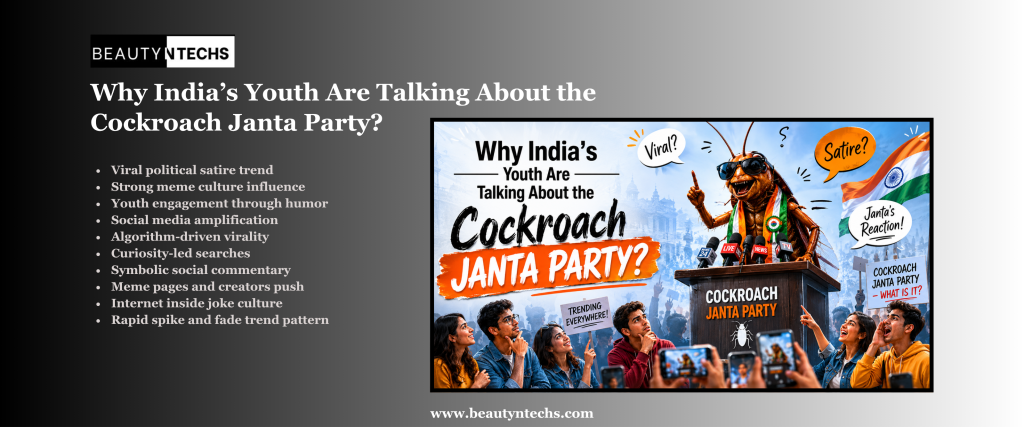
India’s internet culture moves fast. One week, social media debates revolve around cricket and cinema. The next week, an entirely new phrase dominates online conversations, memes, reels, and political discussions. Recently, one such phrase exploded across Indian social media platforms: Cockroach Janta Party (CJP).
At first glance, the name sounds humorous, absurd, and completely unserious. But behind the memes and viral jokes lies something much deeper — a reflection of growing frustration among India’s youth regarding unemployment, inflation, political communication, and the feeling of being unheard.
The rise of the Cockroach Janta Party is not just another meme trend. It represents how India’s younger generation is increasingly using humor, satire, and internet culture to express social and economic anxieties.
So, who are they? Where did this movement come from? Why are young Indians connecting with it so strongly? And why did a controversial insult become one of the biggest viral political conversations online?
Let’s understand the complete story.
What Is the Cockroach Janta Party?
The Cockroach Janta Party, often shortened to CJP, is a viral internet-driven satirical movement that gained momentum across India through social media platforms like Instagram, X (Twitter), YouTube Shorts, and Reddit.
Unlike traditional political parties, CJP did not begin with rallies, offices, or formal political campaigns. It started online — through memes, jokes, parody graphics, AI-generated posters, and sarcastic political commentary.
The movement became popular after controversial remarks circulated online comparing struggling unemployed youth to “cockroaches” or “parasites” living within the system. Whether interpreted literally or symbolically, many young people saw the remarks as insulting and disconnected from the realities they face every day.
Instead of reacting only with anger, internet users did something unexpected:
They turned the insult into an identity.
That is how the phrase “Cockroach Janta Party” became viral.
Why Did the Name Go Viral?
The internet has a strange habit of transforming criticism into culture. Across the world, many online communities reclaim negative labels and convert them into symbols of resistance or humor.
In India, the term “cockroach” suddenly became symbolic of:
- survival under pressure
- being ignored by society
- living through economic hardship
- adapting despite challenges
Young users began creating:
- fake political posters
- meme manifestos
- satirical speeches
- campaign slogans
- parody election symbols
Within days, the trend spread across platforms and attracted millions of views.
The movement succeeded because it blended:
- humor
- frustration
- politics
- meme culture
- social commentary
all into one highly shareable internet phenomenon.
Who Started the Movement?
The movement is believed to have originated from independent creators and meme communities online. One of the names often associated with the rise of the trend is Abhijeet Dipke, whose content and online commentary helped amplify the movement.
However, unlike structured political campaigns, the Cockroach Janta Party does not have a single centralized leadership system. It behaves more like a decentralized internet movement where users collectively create and spread content.
That decentralized nature is exactly what made it powerful.
No official office.
No formal spokesperson.
No membership forms.
Just memes, relatability, and viral participation.
Why India’s Youth Connected With CJP?
The biggest reason behind the popularity of the movement is simple:
Many young Indians feel emotionally connected to the frustrations being expressed.
1. Rising Unemployment
One of the strongest issues driving the trend is unemployment.
Millions of educated young Indians today face:
- competitive job markets
- limited opportunities
- unstable employment
- low starting salaries
Even highly qualified graduates often struggle to secure stable careers. This creates a feeling of helplessness and disappointment.
When satirical content reflects these struggles, young audiences naturally relate to it.
2. Inflation and Rising Living Costs
Another major factor is inflation.
Young people today are dealing with:
- expensive housing
- rising fuel prices
- costly education
- increasing food expenses
- high transportation costs
At the same time, salary growth has not always matched the increase in living expenses.
As a result, many people feel financially trapped despite working hard.
3. Meme Culture as a Form of Expression
India’s Gen Z communicates differently from previous generations.
Rather than long political speeches, today’s youth often use:
- memes
- short videos
- sarcasm
- dark humor
- satire
to discuss serious issues.
The Cockroach Janta Party perfectly matched this communication style.
It transformed political frustration into internet culture.
Was Someone Really Insulting the Youth?
One of the key reasons the movement exploded was because many users believed that certain public remarks indirectly insulted unemployed or struggling youth.
Online discussions claimed that younger generations were being portrayed as:
- dependent
- lazy
- unproductive
- burdens on society
Whether these interpretations were fully accurate or amplified by social media narratives, the emotional reaction was very real.
The internet responded with:
“If society sees us as cockroaches, then we’ll become the Cockroach Janta Party.”
This ironic reversal became the emotional core of the movement.
The Role of Social Media Algorithms
Another reason the movement grew rapidly was platform algorithms.
Content that combines:
- politics
- humor
- controversy
- youth frustration
tends to spread quickly.
Instagram Reels, YouTube Shorts, and X posts amplified:
- meme edits
- AI campaign posters
- fake speeches
- satirical slogans
Because users engaged heavily with the content, algorithms pushed it even further.
This created a viral loop.
Is CJP a Real Political Party?
Technically, no.
The Cockroach Janta Party is not currently a registered political organization in the traditional sense. It is more accurately described as:
- a satirical internet movement
- a youth-driven meme culture phenomenon
- a symbolic protest trend
However, its influence lies in the conversations it created.
Even though the movement started as satire, it opened discussions around:
- unemployment
- mental health
- inflation
- youth frustration
- political disconnect
And that made it socially important.
Why Meme Politics Is Becoming Powerful in India?
The rise of CJP reflects a bigger shift happening globally:
politics is becoming internet-native.
Modern political influence no longer depends only on:
- television debates
- newspapers
- public rallies
Today, memes and viral content shape public perception faster than traditional media.
Young audiences often engage more with:
- a 20-second meme
than with: - a 2-hour political discussion
This shift is changing how political narratives spread.
The Psychological Side of the Movement
There is also a deeper psychological reason behind the popularity of movements like CJP.
Humor helps people process stress.
When economic pressure rises, societies often create:
- satire
- parody
- comedy movements
as coping mechanisms.
For many young people, CJP became:
- relatable
- emotionally validating
- socially unifying
It gave frustrated individuals a sense that:
“others feel the same way too.”
Criticism and Concerns Around the Movement
Not everyone views the movement positively.
Critics argue that:
- meme politics oversimplifies complex issues
- satire can spread misinformation
- online outrage sometimes lacks constructive solutions
Some believe the movement encourages cynicism rather than action.
Others worry that internet-driven political culture can become emotionally reactive instead of fact-based.
These concerns are valid and highlight the need for responsible public discourse.
What CJP Says About Modern India?
Regardless of whether people support or criticize the movement, one thing is clear:
the rise of CJP reflects real emotions within sections of India’s youth.
It reveals:
- economic anxiety
- social pressure
- digital frustration
- political skepticism
- desire for recognition
At the same time, it also showcases:
- creativity
- humor
- internet intelligence
- collective participation
In many ways, the movement is less about cockroaches and more about:
feeling invisible in a rapidly changing society.
The Bigger Question: What Does India’s Youth Want?
Beyond memes and trends, most young people are ultimately asking for:
- opportunity
- dignity
- stability
- fair economic growth
- better communication from leadership
India has one of the world’s youngest populations. The future of the country depends heavily on how effectively this generation is empowered.
If frustrations continue growing without meaningful engagement, internet satire may evolve into deeper social dissatisfaction.
The Internet Has Changed Political Expression Forever
Movements like the Cockroach Janta Party show how dramatically political expression has evolved.
Today:
- a meme can become a movement
- a hashtag can dominate national discourse
- satire can shape public sentiment
The internet has blurred the lines between:
- comedy
- criticism
- activism
- entertainment
And Gen Z understands this ecosystem better than anyone.
Conclusion
The Cockroach Janta Party may have started as a viral joke, but its popularity reflects something much larger happening in India’s social and political landscape.
It represents a generation dealing with:
- unemployment
- inflation
- uncertainty
- pressure to succeed
- digital overload
Instead of remaining silent, young people transformed frustration into satire and built an online movement that captured national attention.
Whether CJP fades away or evolves further, it has already achieved one thing:
it forced people to pay attention to the emotions and anxieties of India’s youth.
And perhaps that is why millions continue talking about it.
Because behind the memes, behind the jokes, and behind the viral content lies a very real question:
Is today’s generation being heard, or only being laughed at?