
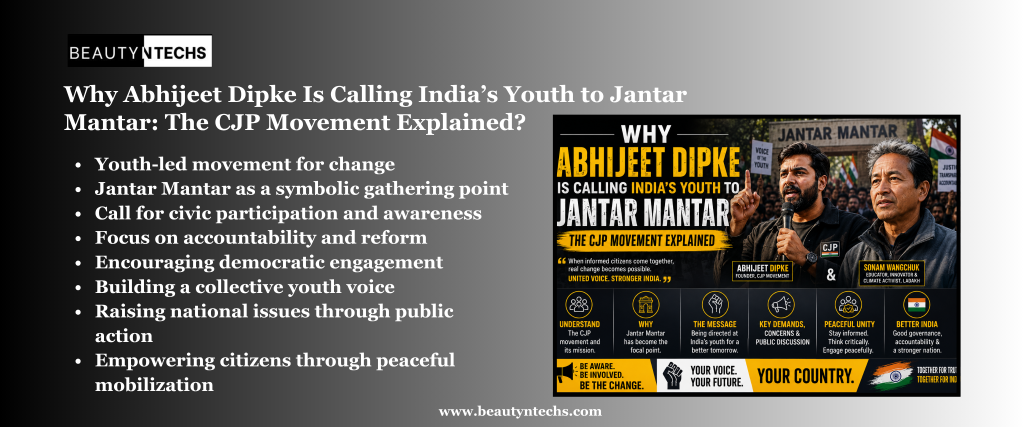
India has witnessed many youth movements over the decades. From anti-corruption campaigns and student-led protests to digital activism and social reform initiatives, young Indians have repeatedly demonstrated their ability to influence public discourse. In 2026, a new movement has captured national attention: the Cockroach Janta Party (CJP) and its founder, Abhijeet Dipke.
What began as an online satirical movement has evolved into a nationwide conversation about education, unemployment, examination irregularities, accountability, and the future of India’s youth. With Dipke announcing his return to India and calling on young people to gather at Jantar Mantar in New Delhi, the movement has entered a new phase—moving from social media to the streets. Reports indicate that the protest is focused on demanding accountability for examination-related controversies and seeking the resignation of Union Education Minister Dharmendra Pradhan.
The development has become even more significant due to support from education reformer and activist Sonam Wangchuk, who has publicly indicated he would join the protest if no action is taken on the concerns being raised.
But who is Abhijeet Dipke? What is the CJP movement? Why is it resonating so strongly with India’s youth? And what could this movement mean for the future of public activism in India?
Who Is Abhijeet Dipke?
Abhijeet Dipke is the founder of the Cockroach Janta Party (CJP), a movement that gained extraordinary traction online in 2026. Dipke, who has been based in the United States, initially emerged as a digital activist using satire, social media campaigns, and internet culture to discuss issues affecting young Indians.
Unlike traditional political leaders, Dipke built his influence primarily through digital platforms. His communication style combines:
- Humor
- Satire
- Youth-focused messaging
- Social media engagement
- Public accountability campaigns
His growing popularity demonstrates how modern activism increasingly relies on digital communities rather than conventional political structures.
What Is the Cockroach Janta Party (CJP)?
The Cockroach Janta Party is not a traditional political party in the conventional sense. It began as an online movement that transformed a controversial “cockroach” label into a symbol of resilience and resistance.
The term “cockroach” was adopted by supporters as a metaphor for ordinary citizens who feel ignored, underestimated, or overlooked but continue to survive despite challenges. According to reports, the movement gained momentum after remarks that many young people interpreted as insulting toward unemployed youth.
Instead of rejecting the label, supporters embraced it.
This unusual approach turned CJP into one of India’s most talked-about internet-driven movements.
Why Is the Movement Trending Across India?
The answer lies in timing.
India’s youth are currently facing several major challenges:
Rising Unemployment
Finding quality employment remains difficult for many graduates. Despite obtaining degrees and professional qualifications, numerous young Indians continue to struggle with job opportunities.
Youth unemployment remains significantly higher than the national average, contributing to frustration among educated young citizens.
Examination Controversies
One of the biggest factors fueling support for CJP has been widespread concern regarding competitive examinations.
Recent controversies involving:
have generated public anger among students and parents. Allegations involving paper leaks, marking issues, administrative errors, and exam cancellations have affected millions of students.
For many young people, these incidents represent more than isolated mistakes—they symbolize deeper concerns about educational governance.
Cost of Living and Economic Pressure
Inflation, rising living expenses, housing costs, and economic uncertainty have further amplified youth dissatisfaction.
Many young Indians feel they are working harder than previous generations while facing greater financial uncertainty.
Why Jantar Mantar?
Jantar Mantar is not merely a location.
It has become one of India’s most recognized symbols of peaceful democratic protest.
Over the years, citizens, activists, students, social reformers, and public-interest groups have used Jantar Mantar as a platform to voice concerns and seek accountability.
By choosing Jantar Mantar, Dipke appears to be emphasizing constitutional and democratic methods of protest rather than confrontation. Recent statements indicate he intends to pursue peaceful assembly and lawful protest.
What Are the Main Demands of the Protest?
Based on public statements and media reports, the movement’s primary concerns include:
Accountability in Education
Many supporters believe examination systems need stronger oversight and transparency.
The movement argues that students invest years preparing for competitive examinations, and administrative failures can have life-changing consequences.
Resignation of the Education Minister
A central demand being discussed by the movement is the resignation of Union Education Minister Dharmendra Pradhan over examination-related controversies.
Student-Centered Reforms
Supporters are calling for reforms designed to improve:
- Examination integrity
- Transparency
- Student welfare
- Accountability mechanisms
Why Is Sonam Wangchuk‘s Support Significant?
The potential involvement of Sonam Wangchuk has added national attention to the movement.
Wangchuk is widely known for:
- Educational innovation
- Rural development initiatives
- Environmental activism
- Policy advocacy
His work has inspired millions across India and internationally.
Recent reports indicate Wangchuk expressed willingness to join the protest if meaningful action is not taken regarding the concerns being raised.
His support gives the movement additional credibility among students and education-focused communities.
How Social Media Built the CJP Movement?
Perhaps the most fascinating aspect of CJP is how quickly it grew.
Traditional political organizations often require:
- Offices
- Funding networks
- Membership structures
- Local chapters
CJP grew largely through:
According to reports, the movement attracted millions of followers and hundreds of thousands of petition supporters within a short period.
This demonstrates the power of digital-first activism in modern India.
The Rise of Youth-Led Digital Activism
The success of CJP reflects a broader shift in how political and social engagement works today.
Young people increasingly use:
- Memes
- Viral videos
- Online campaigns
- Hashtag movements
- Digital petitions
to express opinions and mobilize support.
Unlike previous generations, today’s youth can build nationwide movements from smartphones.
This democratization of influence has transformed the political landscape.
Why Young Indians Relate to the Movement?
Many supporters see the movement as representing issues they encounter daily.
Feeling Unheard
A common sentiment among younger generations is that their concerns are not receiving sufficient attention.
Pressure to Succeed
Students face intense pressure regarding:
- Exams
- Careers
- Competition
- Financial stability
When systems appear to fail, frustration naturally follows.
Desire for Accountability
Many young people are not simply seeking criticism; they are seeking accountability and reform.
This distinction helps explain why the movement has attracted attention beyond internet meme culture.
Supporters and Critics
Like any major movement, CJP has supporters and critics.
Supporters Say:
- It gives youth a voice.
- It highlights important educational issues.
- It encourages civic participation.
- It promotes accountability.
Critics Say:
- Social media movements can oversimplify complex problems.
- Viral campaigns sometimes prioritize emotion over policy detail.
- Internet popularity does not automatically translate into solutions.
Both perspectives contribute to a broader democratic debate.
What This Means for India’s Future?
Regardless of political opinions, the rise of CJP reveals something important:
India’s youth want to participate in shaping the country’s future.
They care about:
- Education
- Employment
- Governance
- Opportunity
- Transparency
The movement demonstrates that younger generations are increasingly willing to organize, speak publicly, and demand accountability through both digital and physical platforms.
The Bigger Picture
The story of Abhijeet Dipke and the Cockroach Janta Party is ultimately about more than a protest.
It is about:
- Youth engagement
- Democratic participation
- Education reform
- Public accountability
- The evolution of activism in the digital age
Whether the movement achieves all of its objectives remains to be seen. However, it has already succeeded in bringing important issues into the national conversation.
Conclusion
The planned gathering at Jantar Mantar represents a defining moment for a movement that began online and quickly grew into a nationwide discussion.
Abhijeet Dipke’s call for peaceful protest, combined with support from education advocates like Sonam Wangchuk, has transformed the Cockroach Janta Party from a viral internet trend into a significant youth-driven civic movement.
At its core, the movement reflects the aspirations, frustrations, and expectations of a generation seeking accountability and reform.
Whether one agrees with its methods or not, one thing is undeniable:
India’s youth are making their voices heard—and the country is paying attention.